The Art of the Piano ââ“ Grace Nikae Jonathan Korth Mae Zenke Orvis Auditorium May 5
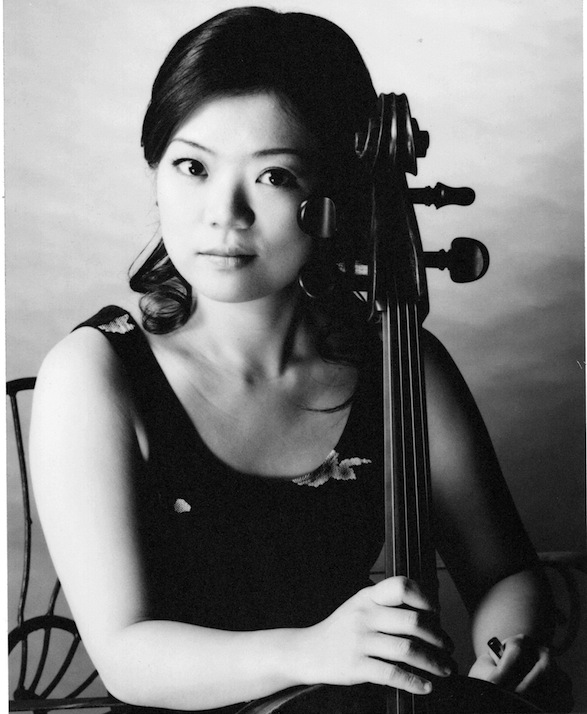
I-Bei Lin Cellist
Cellist I-Bei Lin has an impressive performance history, having given recitals throughout the globe, including New Zealand, Thailand, Taiwan, much of Europe, and the Us. She received her available's degree from the Eastman School of Music and master's and doctoral degrees from Northwestern Academy. She is currently an Associate Professor of Cello and Chair of Strings at the University of Hawai'i at Mānoa.
This review is of an unedited, alive recording of a recital from April eighteen, 2011, featuring works past Beethoven, Donald Reid Womack, Debussy, and Gregor Piatigorsky. In the spirit of the "live" performance, I made the decision not to heed to the recording numerous times, but to imagine I was in attendance. I believe that this is the most objective approach.
The recital opened with the Sonata for Piano and Cello, Op. 102, No.one, of Ludwig van Beethoven. This piece of work belongs to the showtime of Beethoven's late period. It is circuitous and unconventional in grade. Dr. Lin played with confidence, indicating her mature grasp of Beethoven'southward visionary ideas. The Adagio was especially praiseworthy in its pacing and sustained intensity. It was an auspicious beginning.
fff, composed in 2011 peculiarly for Dr. Lin and pianist Jonathan Korth past Donald Reid Womack (b. 1966), followed the Beethoven. One might be excused for expecting that the title referred to the dynamic marker fortississimo and that a very loud piece was to ensue; the title, yet, refers to its 3 pieces (falling, floating, flight) played without intermission. Womack writes, "they are bound by a common theme of groundlessness, of having air between oneself and the world". These pieces conveyed their corresponding titles in a highly constructive manner that capitalized on Dr. Lin's considerable talents, including a fluid technique and wide range of expressive timbres (Womack had previously written a solo slice for Dr. Lin in 2005 titled Scherzophrenic). The cease result was a mesmerizing performance from both Dr. Lin and Mr. Korth.
The Cello Sonata of Claude Debussy airtight the starting time half. This piece of work, written in 1915, is one of the staples of the cello repertoire and equitably then. French cellist Louis Rosoor (incorrectly cited as Louis Rosser in the program notes) claimed Debussy told him that thematic material from the sonata was related to dramatic characters, merely Debussy denied this. Rosoor'southward version is plausible, every bit this work is extremely mercurial, with sudden outbursts and mood changes throughout. Non only must the performer deal with the stylistic difficulties, just also overcome the myriad technical demands as well. To use a popular expression, Dr. Lin "nailed it!" in a highly nuanced performance.
The second half opened with a set up of Taiwanese Folk Songs, which served a dual purpose. The most obvious was that Dr. Lin was honoring the music of her native Taiwan, simply the second was the idea of bringing the audience dorsum down to earth after the atmospheric fff and the emotional roller coaster of the Debussy. These pieces were played by Dr. Lin in a sincere and unpretentious manner.
Paganini'due south 24th caprice for violin has been the basis for bright variations by many great composers. Piano works by Liszt, Brahms, and Rachmaninoff readily come up to mind, but why should pianists have all the fun? The legendary cellist Gregor Piatigorsky (1903-1976) decided to write a set of variations on this caprice that allowed him to showcase his justly renowned technical prowess to the hilt. Dr. Lin took up the challenge of Piatigorsky's Variations on a Theme of Paganini to end the recital. Taking a page from Edward Elgar, Piatigorsky wrote fourteen variations equally musical portraits of famous friends. They are, in order, Pablo Casals, Paul Hindemith, Raya Garbousova, Erica Morini, Felix Salmond, Joseph Szigeti, Yehudi Menuhin, Nathan Milstein, Fritz Kreisler, Gregor Piatigorsky, Gaspar Cassado, Mischa Elman, Ennio Bolognini, Jascha Heifetz, and Vladimir Horowitz. The variations are frequently witty, only many take the form of within jokes, as information technology is not ever readily credible how each variation connects to its named inspirations (for example, the Hindemith variation sounds nada like Hindemith the composer). This is a virtuoso piece of work that projects much better live than in recordings, as the visual attribute is an integral part of the experience. In any instance, it is a highly pleasurable bout-de-strength for the cellist. Dr. Lin tossed off the challenges with ease in a confident operation. The rousing finish ended the concert in manner and the audience reacted with loud applause.
I must commend first-class pianist Jonathan Korth as an outstanding collaborator to Dr. Lin, e'er sensitive to balance issues and flexible to the cellist's every impulse.
In 2005, the late Edith Eisler wrote in the pages of this journal that Dr. Lin "is a very fine cellist." In 2013, I must tip my lid to her and wholeheartedly agree with her assessment. Dr. Lin is a fine cellist, every bit at home in wide-ranging styles and possessing the technique to make it all seem so easy.
0 Response to "The Art of the Piano ââ“ Grace Nikae Jonathan Korth Mae Zenke Orvis Auditorium May 5"
Post a Comment